

Learn More About BridgeVision
About Us
BridgeVision is an engineering-led infrastructure technology company focused on modernizing how bridge condition is captured, organized, and understood over time.
We help bridge owners establish reliable digital records of their structures using high-resolution reality capture, 3D modeling, and digital twin workflows. Depending on the bridge type, site constraints, access limitations, and engineering objectives, we deploy data capture methods designed for the purpose.
Our focus is not on any single technology. Our focus is on selecting the right capture strategy to produce useful, repeatable, engineering-grade data.
By combining practical bridge engineering experience with modern digital workflows, BridgeVision helps owners move beyond isolated inspection snapshots toward structured condition records that can support planning, monitoring, rehabilitation, and long-term lifecycle decisions.
Our approach is grounded in nearly 20 years of real-world bridge engineering practice, including inspection program management, rehabilitation planning, and capital delivery for complex infrastructure assets across Ontario. We work with municipalities, transportation agencies, bridge authorities, and engineering consultants on structures where traditional inspection methods are costly, disruptive, or technically difficult to execute and where the quality of inspection data genuinely matters for decisions that follow.
Our Vision
A single inspection captures a moment in time.
BridgeVision is focused on helping owners connect those moments into a more continuous story of bridge condition, showing not only what was observed, but how deterioration, risk, and intervention needs may be changing over time.
The goal is not to replace engineering judgment, but to give engineers and asset managers better continuity of information between inspection cycles.
By building structured, repeatable datasets across inspection cycles, we enable infrastructure owners to track how bridge condition evolves over time rather than guessing between discrete observations. Each inspection cycle adds to a growing longitudinal record that becomes more valuable with every addition.
Over time, this foundation supports capabilities that current inspection practice cannot deliver — analytical tools that identify deterioration trends earlier, quantify rates of change more reliably, and support more informed prioritization of maintenance and rehabilitation investments across large asset portfolios.
The long-term direction is toward predictive asset management — understanding not just the current condition of a bridge, but how it is likely to behave over the coming years and what interventions will deliver the best lifecycle outcomes. We are building toward that capability deliberately, starting with the data foundation it requires. The methodology we are developing is designed to scale across asset types, across jurisdictions, and across the broader infrastructure challenges that Canada and international markets share.
How we work
Every BridgeVision project begins before any field data is collected.
We start by understanding the structure: reviewing existing drawings, prior inspection records, known areas of concerns, access constraints, and the owner’s intended use of the data. From there, we develop a project-specific capture strategy that defines the most appropriate methods, coverage requirements, resolution targets, and quality expectation for each structural element.
The engineering requirements drive the methodology, not the technology.
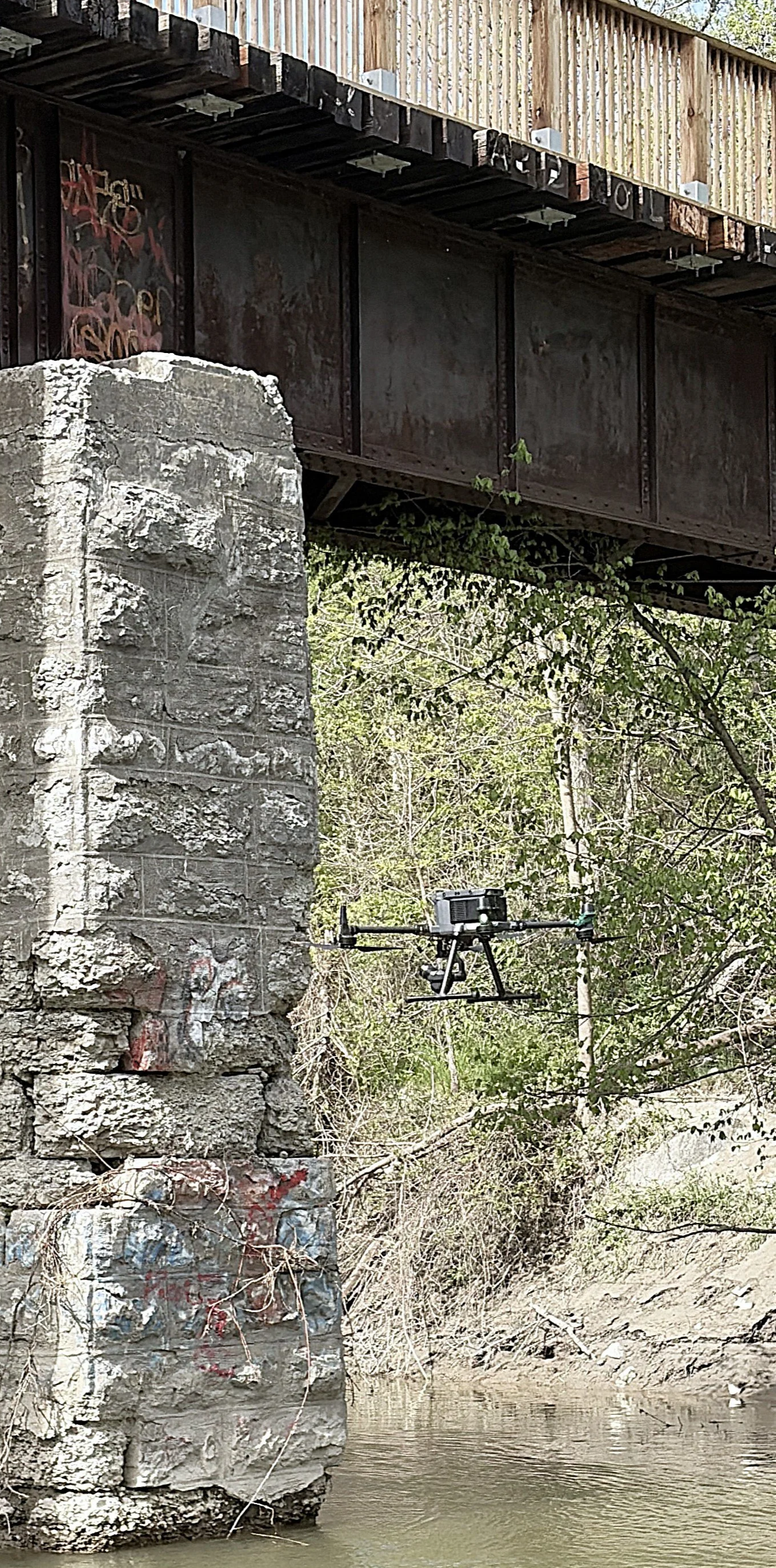
Depending on the structure and site conditions, data collection may involve drone-based imaging, LiDAR, handheld documentation, terrestrial scanning, truck-mounted systems, or a combination of methods. Each capture plan is developed to suit the bridge, with consideration for lighting, access, standoff distance, viewing angles, overlap requirements, and the level of detail required for meaningful engineering review.
Field data is collected against the approved plan, with any deviations documented. This helps ensure the resulting dataset is not simply a visual record, but a repeatable and defensible digital baseline that can support future comparison.
Collected data is then processed into structured digital outputs, which may include 3D point clouds, reality meshes, orthomosaic imagery, annotated visual records, or cloud-based digital twin environments. Each dataset is reviewed against defined quality expectations, with issues flagged and lessons incorporated into future capture cycles.
The processed dataset is then reviewed by a licensed Professional Engineer. This is where BridgeVision’s engineering foundation matters most.
We do not deliver a model and leave the owner to interpret it alone. We review the digital evidence in the context of the structure, its known concerns, and the decisions the owner needs to make. The result is a practical engineering summary supported by measurable digital records, helping to reduce ambiguity, improve communication, and support more confident asset management decisions.